
Jenna Ortega, Amy Adams, Mia Tharia, Natasha Lyonne and Steve Buscemi star in Taika Waititi's film adaptation of Kazuo Ishiguro's Booker-longlisted novel, a story about an artificial friend who learns, from the outside looking in, what it means to love someone.
Rated: PG-13 · Runtime: 1 hr 56 min (116 min) · In theaters: October 23, 2026
There's a moment early in Klara and the Sun when the title character stands in a shop window, turns her face toward the light, and simply waits to be chosen. It's a small image, but it carries the whole film. Taika Waititi's adaptation of Kazuo Ishiguro's novel isn't really a movie about robots. It's a movie about the special nature of the human experience, seen through the eyes of someone who can study it, admire it and serve it, but may never fully share it. In exploring the boundaries of artificial intelligence, empathy and love, it lands as one of the warmest and most quietly moving films of the fall.
The early critical reaction out of the BFI London Film Festival has been rough, and some reviewers have called the film too whimsical for Ishiguro's restrained prose. I understand the complaint, but I think it misreads what Waititi is doing. Klara sees the world with total sincerity and wonder. A film told from her point of view should feel a little bright, a little odd and a little unguarded. That's not a betrayal of the book. It's a choice to let us feel Klara's perspective instead of just observing it.
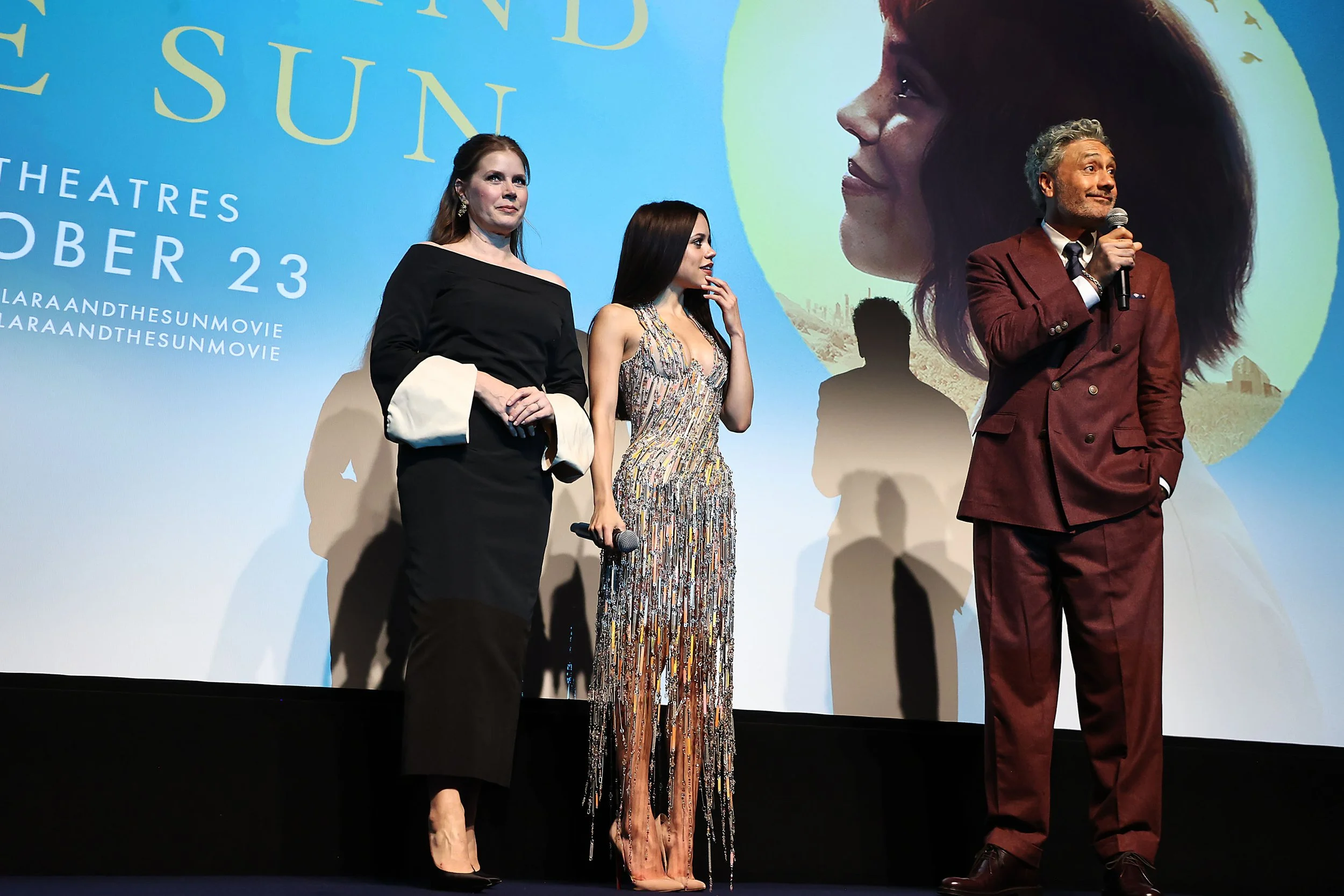
Jenna Ortega, Amy Adams, and Taika Waititi at the NYC Premiere of Klara and the Sun
What Is Klara and the Sun About? (No Spoilers)
Klara (Jenna Ortega) is an Artificial Friend, a solar-powered AI companion built to keep children and teenagers from feeling lonely. She spends her days in The Friend Store under the watch of the Store Manager (Natasha Lyonne), studying passersby and hoping someone will take her home. Klara is an older model, and newer, flashier Artificial Friends are starting to steal the spotlight.
Then she meets Josie (Mia Tharia), a bright, curious teenager who feels an instant connection with her. Josie's mother (Amy Adams) is skeptical, but Klara soon joins the family in their home in the countryside, where she discovers that Josie is unwell and that this household carries a grief it doesn't talk about.
Because Klara runs on sunlight, she comes to see the Sun as something close to a god: a source of life, healing and hope. As she observes the people around her, including Josie's friend Rick (Aran Murphy) and the enigmatic Mr. Capaldi (Steve Buscemi), Klara begins to wonder what she can do to protect the person she was made to love. Where that faith leads is best discovered in the theater.
From Page to Screen: The Klara and the Sun Film Adaptation
To appreciate the film, it helps to know the book behind it. Kazuo Ishiguro is one of the most celebrated novelists alive. Born in Nagasaki, Japan, and raised in England, he won the Booker Prize in 1989 for The Remains of the Day and was awarded the Nobel Prize in Literature in 2017. His 2005 novel Never Let Me Go explored similar territory, using a quiet, speculative premise to ask what gives a life meaning.
Klara and the Sun was published on March 2, 2021, his first novel after the Nobel. It became an international bestseller, earned a spot on the 2021 Booker Prize longlist, and was widely praised for its tenderness and its unusual narrator, an AI whose limited understanding of people somehow makes her observations feel more profound. Many readers called it one of Ishiguro's most emotional books.
Ishiguro serves as an executive producer on the film, and the screenplay comes from Waititi and Dahvi Waller, with Harry Potter producer David Heyman on board. The adaptation keeps the book's central questions intact: Can love be learned? Is a person something that can be copied? And what happens to the people who are left behind?
Why the Film Works: AI, Empathy and Love
What Waititi understands, and what the film's harshest critics miss, is that Klara's innocence is the point. Her mistakes and misreadings of the world are not just jokes. They're how the movie shows us what humans take for granted. When Klara struggles to make sense of a room, a crowd or a hurtful comment, we're reminded how much quiet work goes into being human: reading moods, forgiving, hoping, grieving.
The humor is Waititi's signature, and yes, it won't land for everyone. But in his best work, from Boy to Hunt for the Wilderpeople, the comedy has always been a way into the sadness, not a way around it. Klara and the Sun follows that pattern. The lighter moments soften us up so the emotional beats in the second half hit harder.
At a time when AI is part of nearly every conversation, it's refreshing to see a story that doesn't treat artificial intelligence as either a threat or a miracle. Instead, the film asks a gentler, more interesting question: if a machine could love us perfectly, would that make it human, or would it simply show us how remarkable it is that we love each other at all?
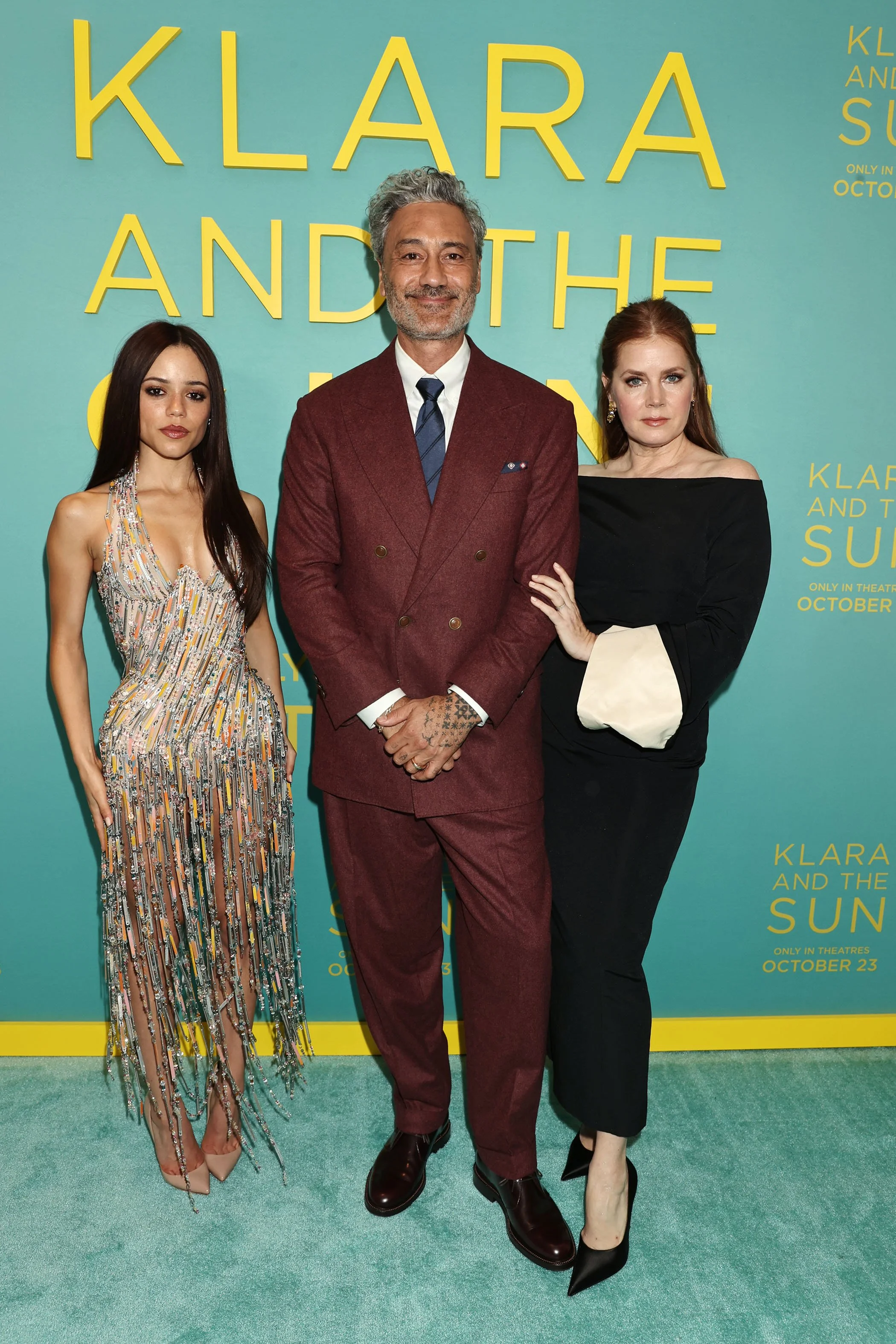
Klara and the Sun NYC Premiere
Performances: Jenna Ortega and Amy Adams
Jenna Ortega makes a bold departure from the darker, deadpan roles that made her famous in Wednesday and Beetlejuice Beetlejuice. Her Klara is open-faced and endlessly attentive, and the performance lives in small physical choices: the tilt of her head, the careful way she moves through a new space, the way her optimism never quite breaks. It's a tricky role that could easily feel hollow, and Ortega finds real feeling inside it.
Amy Adams gives the film its emotional weight as a mother caught between love, fear and loss. Her performance is guarded and prickly, which makes her rare moments of vulnerability more powerful. Newcomer Mia Tharia is a genuine find as Josie, and Natasha Lyonne and Steve Buscemi add flavor in smaller roles. Michael Giacchino's score leans into warmth and wonder, and the New Zealand landscapes give Klara's world a dreamy, storybook quality.
Where to Watch Klara and the Sun
Klara and the Sun opens exclusively in theaters in the United States on October 23, 2026, from Sony Pictures and TriStar Pictures. It is rated PG-13 and runs about two hours. It opens in theaters in the UK on the same day, and in Australia and New Zealand on October 22.
The movie is not yet available on streaming, and no digital or streaming release date has been announced. Sony releases typically arrive on digital rental and purchase platforms first, then later on a streaming service, so check back here for updates.
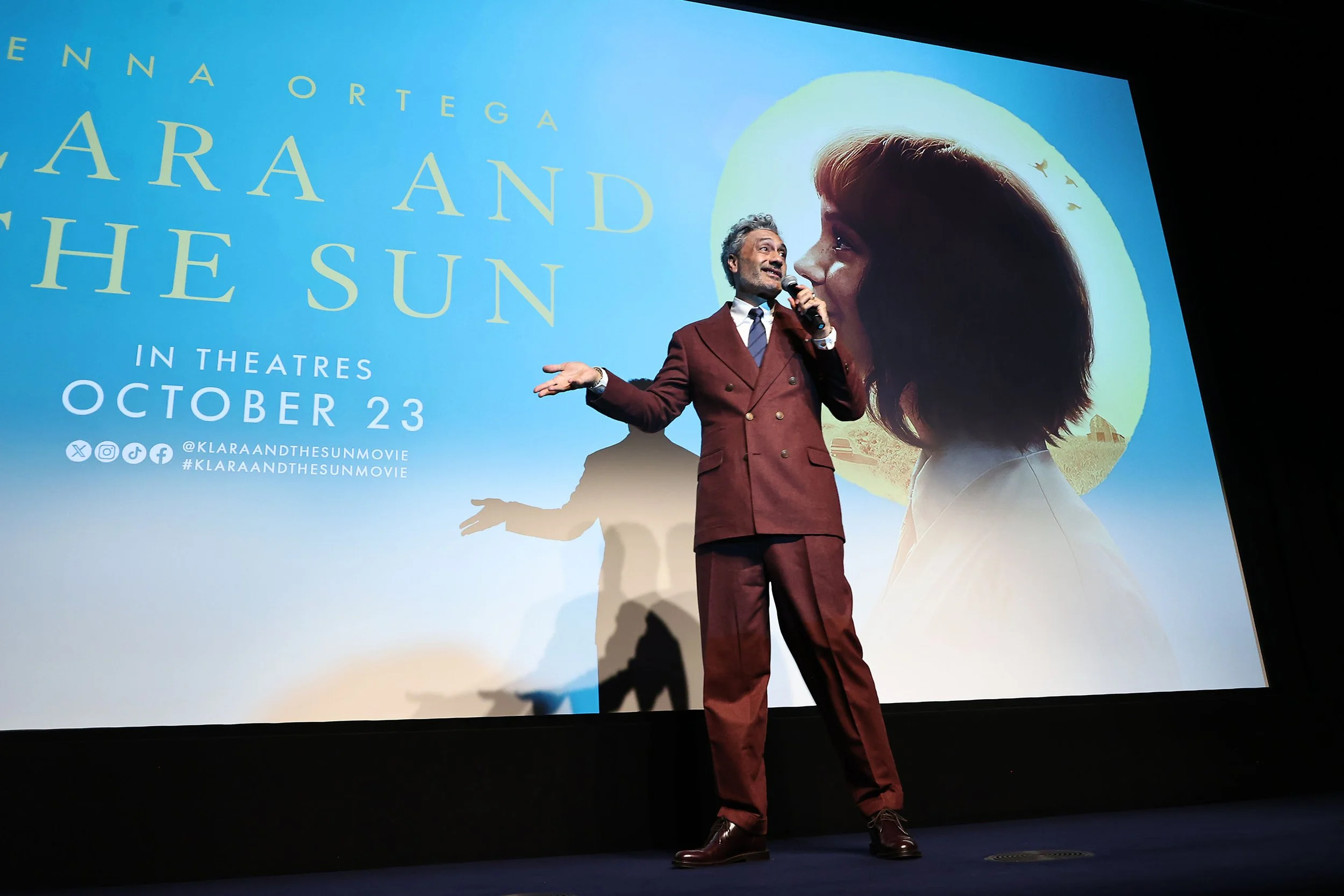
Taika Waititi at the Klara And The Sun NYC Premiere
Final Verdict
Klara and the Sun won't please every Ishiguro purist, and it's not trying to. It's a tender, hopeful and sometimes funny meditation on what it means to be human, told through the eyes of someone who isn't. Jenna Ortega and Amy Adams anchor a story about loneliness, faith and the kind of love no technology can replicate. If you loved the book, or if you're simply curious about where AI and humanity meet, it's worth seeing on the big screen.
Klara and the Sun FAQ
Is Klara and the Sun a movie? Yes. The Klara and the Sun film adaptation is directed by Taika Waititi and stars Jenna Ortega as Klara, with Amy Adams, Mia Tharia, Natasha Lyonne and Steve Buscemi.
When does Klara and the Sun come out? It opens in U.S. theaters on October 23, 2026, after premiering at the BFI London Film Festival on October 15, 2026.
Where can I watch Klara and the Sun? Right now, only in movie theaters. A streaming date has not been announced.
Is Klara and the Sun based on a book? Yes, it's based on Kazuo Ishiguro's 2021 novel of the same name, which was longlisted for the Booker Prize.
Do I need to read the book first? No. The movie stands on its own, though readers will enjoy seeing how Waititi brings Klara's point of view to life.
Is Klara and the Sun kid-friendly? It's rated PG-13 and deals with illness and loss, so it's best for teens and up.